How to find your ring size
To find your ring size, measure a ring that already fits, or wrap the finger and read the millimeters against a size chart. The most accurate way at home is a true scale printable sizer. Ring size is set by the inside circumference in millimeters, and each full US size adds only about 2.55 mm around, so a careful reading matters more than which method you pick.
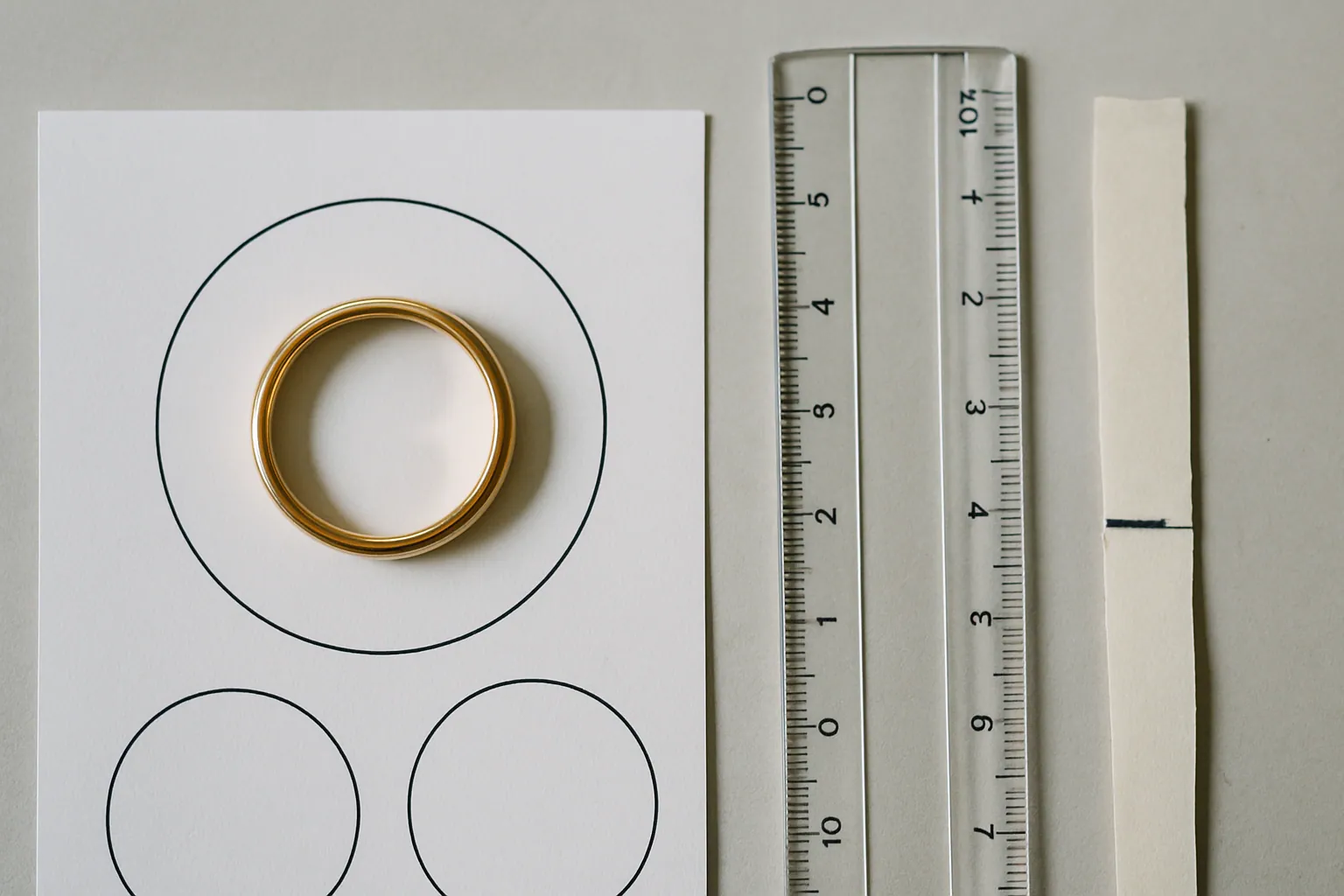
You do not need a jeweler to find your ring size. Pick the method that fits what you have on hand: a ring that already fits, a finger you can measure, or a printer. Each one below gets you to the same number. Ring size is set by the inside circumference in millimeters, the international ISO 8653 standard, and each full US size adds only about 2.55 mm around, so a half size is roughly 0.4 mm across the inside. That small gap is why a careful reading matters more than which method you pick. The last section covers finding a size for someone else without spoiling a surprise.
What is the most accurate way to find your ring size?
The most accurate way at home is a true scale printable sizer that you check against a ruler before you use it. It reads the finger directly in the size you will order, with no conversion step where a small error can creep in. Measuring a ring the person already wears is a close second, and a jeweler with a metal ring gauge is the gold standard if you want a second opinion for free.
The one thing every method needs is scale. A printed chart or sizer is only right if the page prints at 100 percent, so measure the calibration bar with a ruler first. If it is off, reprint with page scaling set to none or actual size.
How do I find my ring size from a ring I already own?
Take a ring that fits the right finger and measure the inside, straight across. Use a ruler or a caliper to read the inner diameter in millimeters, then match that number to a chart. This is the best route for a gift or a surprise, since you are measuring a ring instead of a finger.
For a quick reference, a ring that measures about 16.5 mm across the inside is close to a US size 6, 17.3 mm is near a size 7, and 18.2 mm is near a size 8. Each full size up adds a little under a millimeter of diameter, so read carefully and round to the nearest half size.
Two ways to take the reading:
- Lay the ring on a ruler and measure the inside edge to inside edge, at the widest point. Hold your eye straight above the ruler so the line does not shift.
- Print the ring size chart and set the ring over the circles until it frames one cleanly, with the circle sitting right inside the band. The number on that circle is your size.
Measure the ring twice and take the reading that repeats. If it lands between two sizes, note both and lean to the larger one.
How do I find my ring size without a ring?
Wrap the finger with a strip of paper or a length of floss, mark where it overlaps, then lay it flat on a ruler and read the length in millimeters. That millimeter number is the inside circumference, which you match to a chart. A size 7, for example, is about 54 mm around.
Keep the strip snug but not tight, sitting at the base of the finger where a ring rides, and pass it over the knuckle first to make sure the size you pick will actually slide on. Paper and floss are better than string here, because string stretches and reads a size too large. For the full step by step, including the two other home methods, see how to measure ring size at home.
If you have a printer, skip the conversion. The printable ring sizer prints a paper strip to true scale, so you wrap it, read the arrow, and get a US size with nothing to convert. Check the scale bar against a ruler before you trust the reading.
How do I find someone's ring size without them knowing?
Borrow a ring they already wear on the right finger and measure its inside diameter, or press it into a bar of soap and measure the print. A ring you can measure beats a guess by a wide margin, and it keeps the surprise intact.
If you cannot get hold of a ring, an average is a rough backup. Most women in the US land around a size 6 to 7, and most men around a 9 to 10. Treat that as a starting point, not an answer, and size a proposal band so it can be resized later. The full playbook, including how to compare hands and ask around without giving it away, is in how to find their ring size secretly.
Tips for an accurate reading
The method matters less than the conditions you measure in. A few habits keep the number honest:
- Measure in the late afternoon or evening, when your hands have warmed up and settled to their average size. Morning and cold hands read small.
- Aim for snug, not tight. The ring should take a little effort over the knuckle and should not spin freely once on.
- Measure two or three times, on different days if you can, and take the size that comes up most.
- For a wide band, add a quarter to a half size. A thick ring needs more room to clear the knuckle than a thin one.
- If you fall between two sizes, pick the larger. A ring is easier to size down than up, and a slightly loose band beats one that will not pass the knuckle.
Turn your measurement into a size you can order
Once you have a millimeter reading, the ring size chart turns it into a US size and shows the UK and EU equivalents in one place. If you want the cleanest home reading, the printable ring sizer skips the math and gives you the size directly, as long as the page prints to scale.
Fingers are not fixed, so your reading can shift a little day to day. If your size seems to move, why ring size changes through the day explains how much swing is normal and when to measure for the truest fit.
Find your size in two minutes
Print a true-scale sizer with a built-in scale check, or convert a millimeter measurement on the page.